|
Although a lot of work has been done over the last few decades to address the problems associated with asbestos in buildings, with the substance banned from use in the UK some 25 years ago, it is still responsible for around 5,000 deaths in the country each and every year.
With Global Asbestos Awareness Week just around the corner (running from April 1st to 7th), now’s the perfect time to consider whether there could be asbestos somewhere on your premises that you don’t know about.
What is asbestos?
Asbestos is the term used to refer to various naturally occurring fibrous minerals that have crystallised to form fibres. These fibres are mechanically strong and don’t evaporate or dissolve in water. They’re also resistant to biological and chemical degradation, as well as heat and fire.
Because of these properties, asbestos was widely used in product manufacture, including items such as boilers, pipes, insulation building materials, car brakes, floor tiles, cement for roofing sheets and pipes, insulation board and so on.
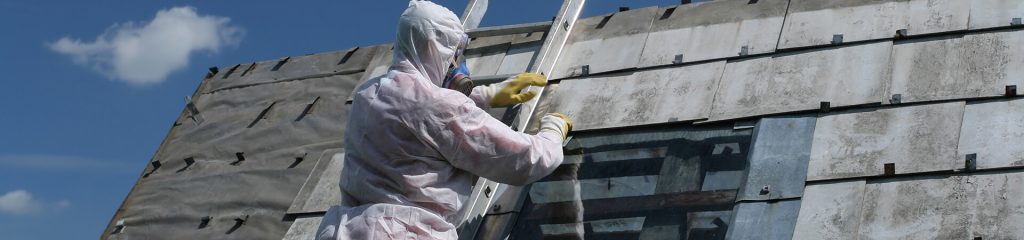
Inhaling asbestos fibres can be particularly hazardous to health, with those working in demolition, building repair and maintenance, and asbestos abatement particularly at risk, as disturbing the materials can release fibres into the air.
Breathing in high concentrations of asbestos over a prolonged period affects the lungs predominantly, causing asbestosis – a disease characterised by difficulty breathing and an enlarged heart. It can take decades for asbestosis to develop and for symptoms to manifest. People with asbestosis are also at an increased risk of developing cancer.
Asbestos in buildings
Asbestos can be present in any buildings built or refurbished before 1999, contained within different materials such as insulation products, lagging on plant and pipework, roofing materials, sprayed coatings for insulation and so on.
Taking the UKATA Asbestos Awareness E-Learning course could be advisable for anyone working in trade or who is responsible for the management and upkeep of buildings, such as building surveyors, construction workers and general maintenance staff.
The aim of this awareness course is to educate candidates about the hazards of long-term exposure to asbestos fibres, with particular emphasis on situations where you might unknowingly come into contact with them.
The course itself is made up of five modules: the types, nature and properties of asbestos, the risks and effects on health, the use and locations of asbestos-containing materials, legislation, and avoiding and reducing the risks.
At the end of the course, a multiple choice exam will be held and, upon successful completion, you will receive your UKATA asbestos awareness certificate, which will be valid for one year from the date you passed the assessment.
If you’d like to build your health and safety knowledge further, our NEBOSH General Certificate course is a great place to start. It’s designed for anyone looking to develop practical skills and gain a respected qualification in workplace safety. To find out more, get in touch with the ACT team today.