|
One positive that any health and safety officer can take when undertaking courses is that the proactive approach to learning and continually developing protocols to reduce the potential risk rather than accepting that injuries and deaths are inevitable is working.
The number of work-related accidents is among the lowest in Europe with just 0.61 per 100,000 workers, which is under half the average for the 27 countries that make up the European Union.
There is also a downward trend in the number of fatal injuries, with 138 workers and 87 members of the public the victims of fatal accidents in the last financial year, which whilst higher than the zero that should be accepted, is still lower than previous years.
The bigger concern is that work-related illnesses have increased, with 12,000 deaths caused by occupational lung diseases.
One of the most concerning trends is that 4800 deaths are related to a material that has been banned for over 25 years, highlighting that some health and safety legislation takes a long time to take effect.
Why Is Asbestos Still Harmful?
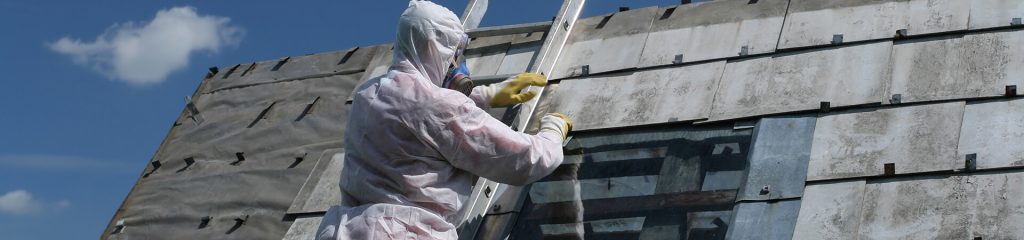
At one point considered a wonder-material, asbestos is a group of crystallised fibrous materials that were fireproof, resistant to chemical degradation and incredibly strong, meaning that they were used in a lot of construction and industrial projects.
It was also used in car brakes and as part of some types of cement, as well as a material for flooring tiles.
It was a very effective material, and when it is inert and in situ, it causes no harm. However, if it is disturbed, the asbestos fibres can be inhaled, and when this happens it can cause two utterly awful lung conditions caused directly by the fibres.
One of these is mesothelioma, a type of cancer that affects the lining of the stomach, heart and lungs and causes intense pain, swelling, shortness of breath, fatigue, persistent coughs and clubbed fingers.
The other is Asbestosis, a similarly painful condition with similar symptoms but is not considered to be a cancer. Both conditions are permanent and require lifelong care to rectify.
Despite the dangers of asbestos being known as early as 1898 when factory inspector Lucy Deane described asbestos as having health risks that were “easily demonstrated”, it took until 1985 for blue and brown asbestos to be banned, whilst any use of asbestos was banned in 1999.
Despite this, many buildings constructed before 1999 may have asbestos, and as a result of this, the risk of exposure to asbestos remains alarmingly common.
In 25 years, the number of deaths caused by asbestos-related conditions has remained constant, highlighting the long-term effects of health and safety legislation and the human cost of not reacting fast enough.
The fact the dangers took decades to be appreciated is partly the result of the long-term nature of the disease and partly the reluctance to abandon a material that proved to be useful.
Many lessons need to be learned from the asbestos disaster when it comes to proactively acting to protect people from occupational health hazards.
If you’d like to build your health and safety knowledge further, our NEBOSH General Certificate course is a great place to start. It’s designed for anyone looking to develop practical skills and gain a respected qualification in workplace safety. To find out more, get in touch with the ACT team today.