|
What is asbestos and where is it found?
Asbestos is a generic term which is used to describe a group of fibrous silicates. There are actually six different minerals with similar “asbestiform” characteristics. The three main types of asbestos that are commonly found in building are:
- Chrysotile – ‘white’ asbestos
- Amosite – ‘brown’ asbestos
- Crocidolite – ‘blue’ asbestos
Asbestos is found throughout the world, including the UK. In the UK, asbestos use was fully banned in 1999 although some forms were banned over a decade earlier. It was mainly used in building between 1930 and the 1950s. Asbestos was used for a range of purposes including:
- Cement
- Insulation
- Floor tiles
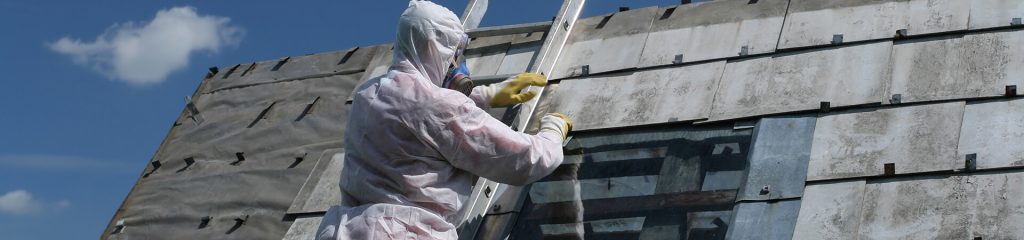
- Roofing
- Guttering
Why is asbestos dangerous?
When materials containing asbestos are disturbed, fibres are released into the air. It’s easy for asbestos to break up into small fibres and these fibres are easily inhaled. Inhaling these fibre can cause serious, fatal diseases. These diseases often take a long time to develop. Diseases can include:
- Mesothelioma
- Asbestosis
- Pleural thickening
The Health and Safety Executive reports that asbestos still kills around 5000 workers every year. Each week 20 tradesmen die as a result of past exposure.
Asbestos Awareness
It’s important to know that asbestos isn’t just a problem of the past. It can still be present today.
Tip 1 – Make sure you’re aware if you’re at risk.
Workers in a huge range of trades could be at risk of exposure to asbestos. These include but are not limited to:
- Engineers
- Demolition workers
- Plumbers
- Painters, decorators and plasterers
- Shop fitters
- Gas fitters
- Electricians
Tip 2 – There are some situations when you are much more at risk of exposure.
Make sure you know all the facts about where you’re working, particularly if you’re starting work on a new, unfamiliar site and if the building was built before the year 2000. You should also make sure your employer has conducted a risk assessment and is aware of any issues that could arise.
Tip 3 – You don’t need to be an asbestos expert to work safely in an at risk zone but you should make sure you’re knowledgeable about a few key facts.
This is the advice given by the HSE:
- You can’t see or smell asbestos fibres in the air
- Asbestos is only a danger when fibres are made airborne and breathed in
- As long as the asbestos is in good condition and it is located somewhere where it can’t be easily damaged then it shouldn’t be a risk to you
- If you unexpectedly come across asbestos during your work, you should stop immediately and you or your employer should carry out a risk assessment
Tip 4 – Make sure you have the correct training.
Current regulations mean that it is the legal duty of employers to provide “information, instruction and training” to any of their employees who are likely to be exposed to asbestos. There are three types of asbestos information, instruction and training which relate to:
- Asbestos awareness which will give workers and supervisors the information they need to avoid work that may disturb asbestos
- Non-licensable work for people whose work will require them to disturb asbestos containing materials such as drilling in asbestos materials and removing asbestos-containing floor tiles
- Licensable work relates to work with higher risk asbestos-containing materials
Remember, attending a training course will not make a worker fully competent. Competence is developed over time by putting those skills into practice.